

Discover Cracow Fortress (Festung Krakau): visit the revitalised 19th century Austrian forts with KrakOff the Map
Updated: May 31

It was in 1850 when Austrian Emperor Franz Jozef decided to turn Cracow, the former Polish capital but then a provincial town, again under Austrian rule after the failed 1848 Cracow revolution, into a fortress city. Due to city’s strategic location in the context of Russian-Austrian geopolitical imperial rivalry in the 19th century, the Habsburg Empire decided to build this fortification in what became one of Austria-Hungary’s largest defence investments in its history. This decision would have an enormous impact in the city's everyday life, economy and urban development until World War I. 38 forts, many barracks, sconces and more than a hundred of other instructure elements were built as a result.
Although some of Cracow's Austrian forts were demolished in the 1950s, most of them, 34, are still standing today. Many fortress fans in Cracow claim that the fortress main enemy or threat today is not the deterioration caused by weather conditions and nature over time but real estate businessmen and architects. For instance, Core Infantry Fort 10 "Prądnik Biały" was demolished in April 2018 without any justification by a construction company that planned to build a modern block urbanization after reporting it to the District Building Inspectorate, but without asking the city conservation supervisor for permission. A court forced the real estate investor to reconstruct the fort and so it did, although in a modernised version in 2024 (now it hosts a supermarket and a hair dresser)

Many of the forts, especially those located in the outskirts of the city or in nearby towns remain disguised or hidden in summer thanks to the dense greenery surrounding and covering them. They are like a hidden treasure. Indeed, they have become priceless examples of military construction heritage scattered around the city and its outskirts. They have a story to tell. A story that has not been yet told to most Cracow visitors, especially to the foreign ones.

One of the most important episodes of this story, although not the only one, is World War I. In November 1914 the Russian armies moved westwards after their initial victories in Eastern Galicia. Because of this, Cracow became a strategically essential Austrian defensive point. The most external forts (particularly the northeastern ones, such as Fort Mogiła, Fort Batowice, Fort Grębałów) were filled with soldiers and arranged to face the Russian enemy. In fact, some fire exchanges and direct fighting took place as the Russian was getting closer Cracow's outskirts, above all around the northern and eastern sections of the Fortress, as the Russian army tested the Austrian defence structure.
In the end, Festung Cracow's successful dissuasive role allowed Austria to prevent a full siege of the city from happening and made the Russian army move to the Limanowa and Gorlice region.
In the interwar period, after autumn 1918 Polish independence and desintegration of Austria-Hungary, Cracow's Austrian forts were used by the Polish army. These were even used in the September 1939 battle to defend Cracow against the Nazi Germany army, but 19th century forts were no longer useful in the modern warfare of World War II.
KrakOff the Map's commitment with Festung Krakow's heritage preservation and promotion
At KrakOff the Map we believe tourism in Cracow is about a lot more than the Market Square, Wawel Castle and Kazimierz. We believe tourism in Cracow can also be about the little-known 19th century Austrian forts. Therefore, at KrakOff the map we believe in the mission of showing the Austrian Forts to foreign visitors in Cracow and in the until now underrated potential of the forts as tourist attractions, also among foreign visitors, and not only among military history geeks. Over the last years the city council and many local institutions have made a big effort to bring the fortress closer to the city's inhabitants, to make them visit it and to spread knowledge about it among them. We would like to do the same but among tourists in Cracow.
We not only want to show you the forts but also show you how these have been revitalised and how in some cases are being reused with new functions today. Cultural centres, scout centres, restaurants and clubs, a radio station, horse riding centres and offices, a coffee store, a supermarket, a hair dresser, a tea shop, 4 museums, and the Jagiellonian University astronomic observation facilities, among other businesses and instituions are held in Cracow's Austrian forts.
Among our detailed information sources for our Cracow Fortress tours is Polish historian Andrzej Chwalba’s book, Festung Krakau, Cracow in the shadow of the fort and Henryk Lukasik's Cracow Fortress. Known and unknown. Another is Kraków 1914 by the same author, who writes about the November 1914 WWI Battle of Cracow between Austria-Hungary and Russia, including references to the important indirect role played by the Austrian forts.
KrakOff the Map is going to take you to the following forts:
By car:
4 hours 200 zl per person
1st stop
Fort 51 1/2 Swoszowice: Military Affairs Museum
For around 1h 15- 1h 30 min we are going to visit the museum inside the fort, mainly dedicated to World War I Eastern Front, including many Austrian and Russian weapons, uniforms, documents, front maps, etc, The museum also shows what life was like for soldiers inside the fort.


2nd stop
Fort 52 Borek (Now a branch of the Podgórze Cultural Centre and home of the Polish Song Library)
This fort was completely renovated during the period 2013-2022, and in addition to modern facilities for cultural events, and a café, it also includes a small museum about its usage by Austrian soldiers in early 19th and 20th century.

3rd stop
Fort 52a Łapianka (now venue of the Museum and Centre of the Scout Movement in Cracow)
It was completely renovated by 2022 and now includes conference rooms and accommodation and entertainment facilities for scouts.

4th stop
Fort 49 Krzesławice
Currently it hosts a Youth Cultural Centre. This place is important because 440 Poles were executed by the Germans during World War II years in here. Next to the fort, there is a monument to commemorate this tragic event.
5th stop
Fort 49 ¼ Grębałów
Today the fort it is mostly used by the Society for the Promotion of Physical Culture Friend of the Horse (a non-profit organization)
What makes this fort special is that is one of the very few that actually took part in World War I during the First Battle of Cracow. The place includes a small museum about the soldiers’ functioning in the fort (as in the case of the previous forts in the itinerary), the Austria-Hungarian army, Austria-Hungary and World War I. The fort was visited by Karl Habsburg Habsburg-Lothringen in 2013, descendant of the Austrian former Royal Family.
We are going to spend around 40 minutes here
6th stop
Kosciuszko Mound Fortification: Citadel Fort 2 Kosciuszko

One of the oldest and largest forts of Festung Krakau. Built from 1850 to 1856. Today it contains the Kosciuszko Mound, Kosciuszko Museum, Radio FRM facilities, a café with a panoramic terrace and a restaurant/hotel hosting mostly weddings.
7th and final stop
Bastion ( Reduit fortification) III Kleparz
It hosts Forty Kleparz
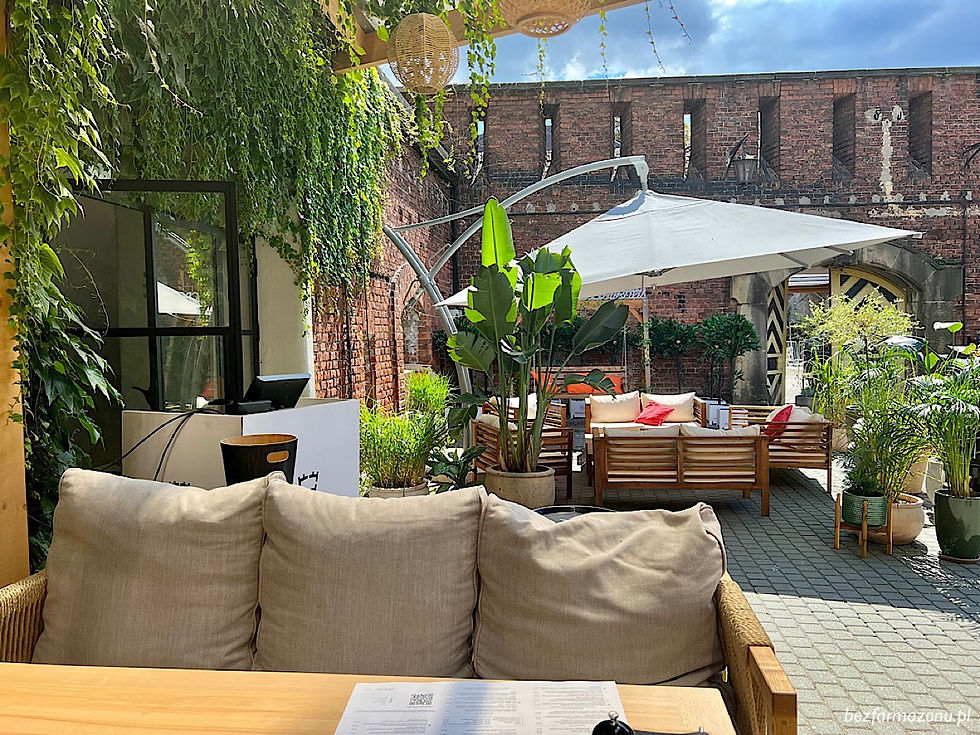
Now a trendy restaurant, club and concert venue, a 15-minute-walk from the Old Town. Today the place keeps many original elements from the fort’s architecture and references to its history.

Additional stop:
Fort Saint Benedict in Lasota Hill, Podgórze, currently under renovation. Probably we won't be able to show you the interior of the fort
On foot from the Old Town:
2 hours, 150 zl per person
-Former imperial-royal Austrian Brewery bulding in Nowy Kleparz area.
-The aforementioned Bastion III "Kleparz" a typical redoubt fort built in 1856–1859 , a fifteen-minute walk from the Old Town.
During World War II it was used by the Nazi German occupiers to keep Soviet prisoners of war.
It hosts the trendy Forty Kleparz music club and restaurant.
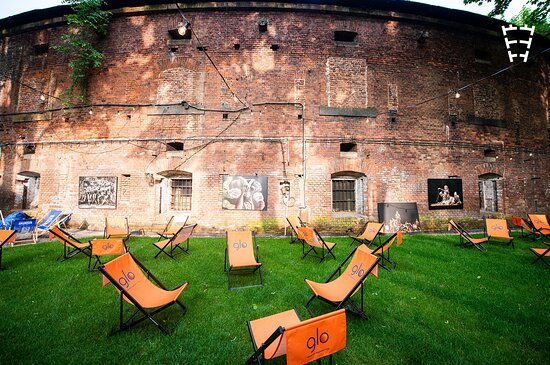

-"Warsaw Lunette" ( Bastion IVa ) - another redoubt fort, originally from the 1850–1856 period. One of the oldest and best preserved parts of the fortress. During World War II occupation it was used as a prison by the Gestapo and during the Stalinist period, the communist regime imprisoned Polish resistence activists in here. Its walls still feature prisoner's inscriptions. It used to host a hostel.

-19th century Austrian barracks today hosting the Home Army Museum, the Photography Museum and the Politechnical University of Cracow (the latter were built in 1877-1878 as barracks for the 13th infantry regimen, originally named after Rudolf Habsburg, the son of emperors Franz Joseph and Elisabeth.


Ruined forts tour
In addition, we also offer a 3 hour by car tour around to explore the many ruined Austrian forts that have not been revitalised
Price: 150 zl/ person

Comments